
Metal and Wood Compatibility in BaZi — Complete Guide | iGeomancy Singapore
Opening: The Cosmic Dance of Metal and Wood
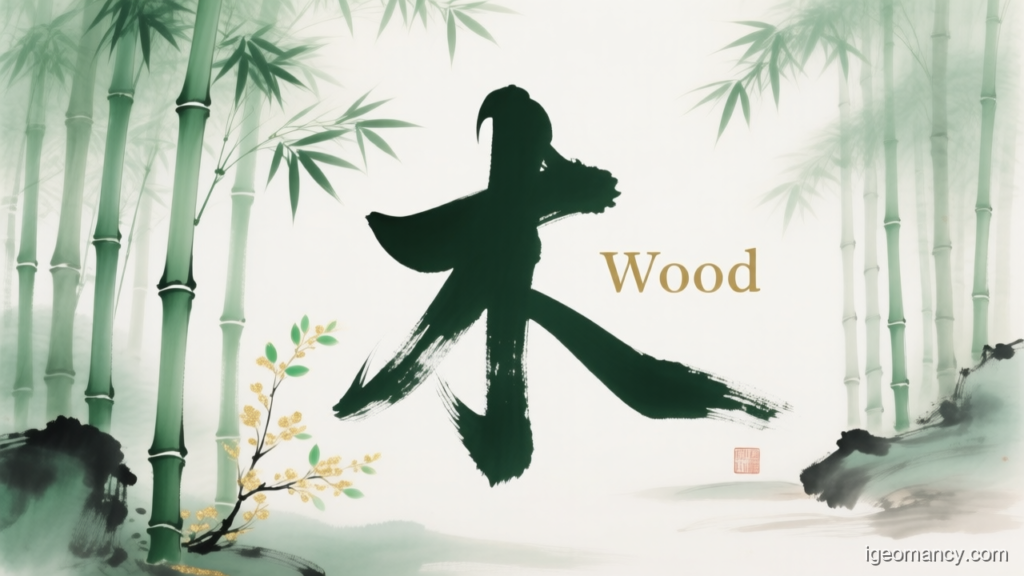
In the profound philosophy of Wu Xing (Five Phases of Qi), Metal and Wood embody a fundamental dynamic that shapes destiny, relationships, and environment. Metal (金) represents structure, precision, and discipline, while Wood (木) signifies growth, creativity, and potential. Their interaction is defined by the controlling cycle: Metal cuts Wood, symbolizing how authority and structure guide and refine natural expansion. This relationship is not inherently antagonistic but rather a necessary balance—Wood requires Metal’s form to channel its energy productively, while Metal gains vitality through Wood’s dynamic flow. Understanding this interplay is vital for BaZi analysis, as it reveals patterns in personal development, partnership dynamics, and environmental harmony. In Singapore’s fast-paced world, mastering this elemental synergy empowers individuals to navigate career paths, relationships, and living spaces with strategic foresight. This guide dissects the Metal-Wood relationship through classical BaZi principles, offering actionable insights for optimal balance in life’s ever-evolving journey.
Metal-Wood Dynamic: The Controlling Cycle Explained
Metal and Wood exist in a controlling relationship within the Five Elements cycle: Metal controls Wood. This is not a destructive force but a necessary discipline. Metal, embodying sharpness, clarity, and boundaries (like a well-honed axe), severs excess growth in Wood, directing its energy toward purposeful expression. Wood, representing expansive potential and creative growth (like a tree seeking sunlight), thrives when guided by Metal’s structure. Without Metal, Wood becomes chaotic, overreaching, or stagnant. Without Wood, Metal loses its purpose—becoming rigid, cold, and lifeless. This dynamic mirrors real-world balance: a tree needs pruning (Metal) to grow strong; a craftsman needs wood (Wood) to shape metal (Metal) into purposeful tools. In BaZi, this control cycle is harmonious when balanced—excessive Metal creates harshness, while excessive Wood leads to uncontrolled ambition. The key is recognizing that Metal’s ‘cutting’ is an act of care, not aggression, enabling Wood to reach its highest potential through disciplined growth.
In BaZi Charts: Identifying Metal-Wood Dynamics
In a BaZi chart, Metal-Wood interaction manifests through the Day Master’s elements and their relationships with other pillars. For example, a Metal Day Master (庚 Geng or 辛 Xin) with Wood in the Hour Pillar (e.g., 甲 Jia or 乙 Yi) signifies an innate need to structure and channel creative impulses. Conversely, a Wood Day Master (甲 Jia or 乙 Yi) with Metal in the Year Pillar (e.g., 庚 Geng) indicates a life path requiring external discipline to avoid scattered energy. The controlling relationship appears when Metal elements (e.g., 庚, 辛, 申, 酉) directly counter Wood elements (e.g., 甲, 乙, 卯, 木), creating tension. However, if Water (which Metal produces) supports Wood, the dynamic softens—Water nourishes Wood, reducing the harshness of Metal’s control. Charts with balanced Metal-Wood ratios show individuals who excel in roles requiring both strategic vision (Metal) and innovative execution (Wood). Imbalance occurs when one element dominates: a chart with overwhelming Metal (e.g., multiple 庚, 辛) may indicate a person who stifles creativity, while excessive Wood (e.g., multiple 甲, 乙) suggests difficulty with focus or boundaries.
Relationship Compatibility: Metal and Wood Day Masters
When Metal (庚, 辛) and Wood (甲, 乙) Day Masters form relationships, their compatibility hinges on mutual respect for their elemental roles. The Metal partner provides the necessary structure for the Wood partner’s expansive energy, preventing chaos. The Wood partner, in turn, infuses the Metal partner with creativity and adaptability, counteracting rigidity. In romantic partnerships, the Metal partner (e.g., a Geng) may initially seem critical to the Wood partner (e.g., a Jia), but this feedback is essential for the Wood partner’s growth. The Wood partner’s emotional openness softens the Metal partner’s austerity. For friendship, they form dynamic teams: Metal handles logistics and strategy, Wood generates ideas. However, conflicts arise if Metal becomes overly controlling (e.g., criticizing Wood’s spontaneous projects) or Wood resists discipline (e.g., ignoring deadlines). The most harmonious unions occur when Metal acknowledges Wood’s creative value and Wood accepts Metal’s need for order. A balanced chart shows Water (to mediate) and Fire (to temper) supporting both elements, preventing either from becoming oppressive.
Career and Business Pairing: Synergy in Action
In professional contexts, Metal-Wood pairings create powerful synergies. Metal (e.g., engineers, lawyers, strategists) provides the framework, precision, and execution needed to turn Wood’s (e.g., artists, innovators, entrepreneurs) ideas into reality. A Metal business leader (Geng) with a Wood creative director (Jia) will thrive: the Metal leader ensures deadlines and budgets are met, while the Wood director drives innovation. This pairing excels in fields like product design, where Metal engineers refine Wood-inspired concepts into marketable solutions. Avoid pairing when Metal dominates without appreciation for Wood’s vision (leading to stifled creativity) or Wood rejects Metal’s structure (causing project failure). Ideal business partnerships include Metal in operations and Wood in R&D. For solo practitioners, a Wood Day Master should seek Metal mentors for discipline; a Metal Day Master should collaborate with Wood partners to spark innovation. The key is leveraging Metal’s control to elevate Wood’s potential, not suppress it.
Feng Shui Interaction: Harmonizing Metal and Wood in Spaces
In Feng Shui, Metal and Wood must be balanced to avoid conflict. Placing Metal elements (e.g., metal furniture, white/gray decor, square shapes) in Wood-dominant spaces (e.g., home offices with wooden desks) can prune excess growth. For instance, a Wood-heavy living room (with plants, green colors) benefits from a Metal accent (like a silver vase) to prevent clutter. Conversely, in Metal-dominant areas (e.g., a minimalist office with metallic finishes), add Wood (e.g., a wooden desk, potted plants) to infuse vitality and prevent sterility. Never place strong Metal directly opposing strong Wood—this amplifies control tension. Instead, use Water (e.g., fountains) between them to mediate (Water is produced by Metal and nourishes Wood). For Singaporean homes, a Metal kitchen tool (e.g., knife block) on a Wood countertop harmonizes the elements. Avoid Metal in bedrooms (stifles Wood’s growth) and Wood in home offices (overstimulates). A balanced space uses Wood for creativity zones (e.g., study) and Metal for focus zones (e.g., meeting areas), with Water as the harmonizer.
When Balance Goes Wrong: Excess and Deficiency
Imbalance in Metal-Wood dynamics causes specific challenges. Excessive Metal (e.g., too many Metal elements in a chart) makes the Wood partner feel criticized, constrained, or emotionally numb—leading to frustration, health issues (liver stagnation per TCM), or failed ventures due to rigidity. Conversely, excessive Wood (e.g., Wood dominating without Metal) causes the Metal partner to feel overwhelmed by chaos, leading to burnout, poor decisions, or abandonment of structure. In careers, this manifests as Wood innovators ignoring deadlines (causing project collapse) or Metal leaders dismissing creative input (stifling team morale). In Feng Shui, an over-Metal space feels cold and uninviting; an over-Wood space feels chaotic and exhausting. To correct Metal excess, introduce Wood (e.g., plants, green decor) to soften control. For Wood excess, add Metal (e.g., metal decor, structured layouts) to create boundaries. The solution always involves Water (e.g., water features) to mediate and harmonize both elements.
FAQ: Metal-Wood Compatibility Questions
Q: Is Metal-Wood compatibility always positive?
A: Not inherently—balance is key. Metal controls Wood, but imbalance causes conflict. Harmony occurs when Metal guides without suppressing, and Wood accepts discipline without resisting.
Q: Can a Wood Day Master marry a Metal Day Master?
A: Yes, but requires mutual respect. The Metal partner must avoid harsh criticism; the Wood partner must embrace structure. Water in the chart harmonizes this pairing.
Q: How do I know if my chart has Metal-Wood imbalance?
A: Check for dominant Metal (multiple 庚, 辛) or Wood (multiple 甲, 乙) without Water or Fire support. Signs include chronic stress or unproductive chaos.
Q: What Feng Shui fixes work for Metal-Wood conflict?
A: Add Water (e.g., a fountain) between Metal and Wood elements. Use green (Wood) in Metal spaces, and metallic accents (Metal) in Wood spaces.
Q: Does Metal-Wood control apply in career partnerships?
A: Absolutely. Metal provides structure for Wood’s ideas. Successful teams have Metal in operations and Wood in innovation, with mutual trust in each other’s roles.
Your Chart. Read by AI. Overseen by a Real Master.
Destiny Compass's Master AI does the reading: your elements, your luck cycles and the days that suit you.
A real BaZi master stands behind it, checking how charts are read and correcting the AI where it goes wrong.
Start with a free chart.
Already a member? Log in to see today’s personalised note for your chart →